
What It Means: A Simple Definition
Exit Outcomes are the culminating capabilities—knowledge, skills, values, and attitudes—that students should consistently demonstrate at the point of graduation. Think of education as a journey:- Course Outcomes (COs) are the mile markers.
- Program Outcomes (POs) are the roadmap.
- Program Educational Objectives (PEOs) are the long-range goals.
- Exit Outcomes are the final destination.
Why Exit Outcomes Matter
Exit Outcomes act as a bridge between classroom learning and real-life performance. They ensure that:- Students graduate job-ready and globally competent.
- Institutions align their teaching with industry and societal needs.
- Accreditation goals like NBA Tier-1 under the Washington Accord are achieved and sustained OBE & NBAOBE for Accreditation &….
Exit Outcomes vs Program Outcomes: Key Differences and Examples
While both Exit Outcomes and Program Outcomes are critical, they serve different purposes in the OBE framework.| Program Outcomes (POs) | Exit Outcomes | |
|---|---|---|
| Definition | Broad competencies defined by national accreditation bodies (like NBA) | Institution-defined, context-specific goals that reflect the total graduate profile |
| Scope | Academic and professional abilities expected of all graduates in a discipline | Holistic capabilities including soft skills, ethics, adaptability, leadership, and employability |
| Role | Serve as mid-level educational benchmarks | Represent the final achievement students must demonstrate at graduation |
| Focus | What students should know and be able to do by graduation | What students can actually demonstrate and achieve upon exiting |
| Assessment | Evaluated through course performance, rubrics, and exams | Validated through capstone projects, internships, exit surveys, and employer feedback |
Engineering
| Program Outcomes (POs) | Exit Outcomes |
|---|---|
| Ability to apply engineering knowledge and solve problems | Ability to design sustainable, industry-ready solutions |
| Proficiency in using modern engineering tools | Mastery in applying digital tools for product lifecycle development |
| Awareness of ethics and sustainability | Commitment to green innovation and ethical technology deployment |
Healthcare
| Program Outcomes (POs) | Exit Outcomes |
|---|---|
| Apply knowledge of anatomy, pharmacology, and diagnostics | Competent clinical decision-maker focused on patient safety and care quality |
| Understand professional responsibilities and communication | Empathetic communicator in multidisciplinary and multicultural healthcare teams |
Arts & Humanities
| Program Outcomes (POs) | Exit Outcomes |
|---|---|
| Analyze texts and cultural contexts | Apply critical theories to real-world social or cultural challenges |
| Communicate in oral and written forms | Craft persuasive arguments across academic, media, and public platforms |
Management
| Program Outcomes (POs) | Exit Outcomes |
|---|---|
| Understand business principles and organizational behavior | Apply strategic thinking in real business scenarios and social entrepreneurship |
| Demonstrate leadership and decision-making skills | Lead with empathy, agility, and ethics in global business environments |
How to Design Exit Outcomes: Best Practices
Designing effective Exit Outcomes in OBE requires careful planning. Here’s a practical approach:1. Engage Stakeholders
Include input from:- Industry partners
- Faculty and academic experts
- Alumni and students
2. Map to Mission, PEOs, and POs
Exit Outcomes should reflect your institution’s vision and complete the arc from CO → PO → PEO → Exit.3. Use Clear and Measurable Language
Focus on observable verbs:- Design, demonstrate, lead, analyze, communicate, collaborate, adapt.
4. Focus on Integration
Ensure that Exit Outcomes combine:- Academic depth
- Interpersonal and professional skills
- Global and ethical awareness
Common Pitfalls to Avoid
- Too vague: “Graduates will be confident individuals.” (How do you measure that?)
- Too many outcomes: Keep it meaningful—5 to 10 Exit Outcomes are usually ideal.
- Lack of alignment: If your curriculum and assessments don’t trace back to Exit Outcomes, they become hollow statements.
How NBA Tier-1 Uses Exit Outcomes
For Tier-1 Accreditation, the NBA expects institutions to:- Track the attainment of COs, POs, PSOs, and Exit Outcomes.
- Use tools like rubrics, surveys, employer feedback, and academic analytics.
- Focus on comprehensive projects, capstone experiences, portfolios, external certifications, or highly integrated assessments that require students to synthesize knowledge and skills from across their program.
- Show continuous improvement, especially in Criterion 8 of the Self-Assessment
- Exit Outcomes help institutions “close the loop”—ensuring feedback from graduates, alumni, industry, and academics drives future planning and corrective actions.


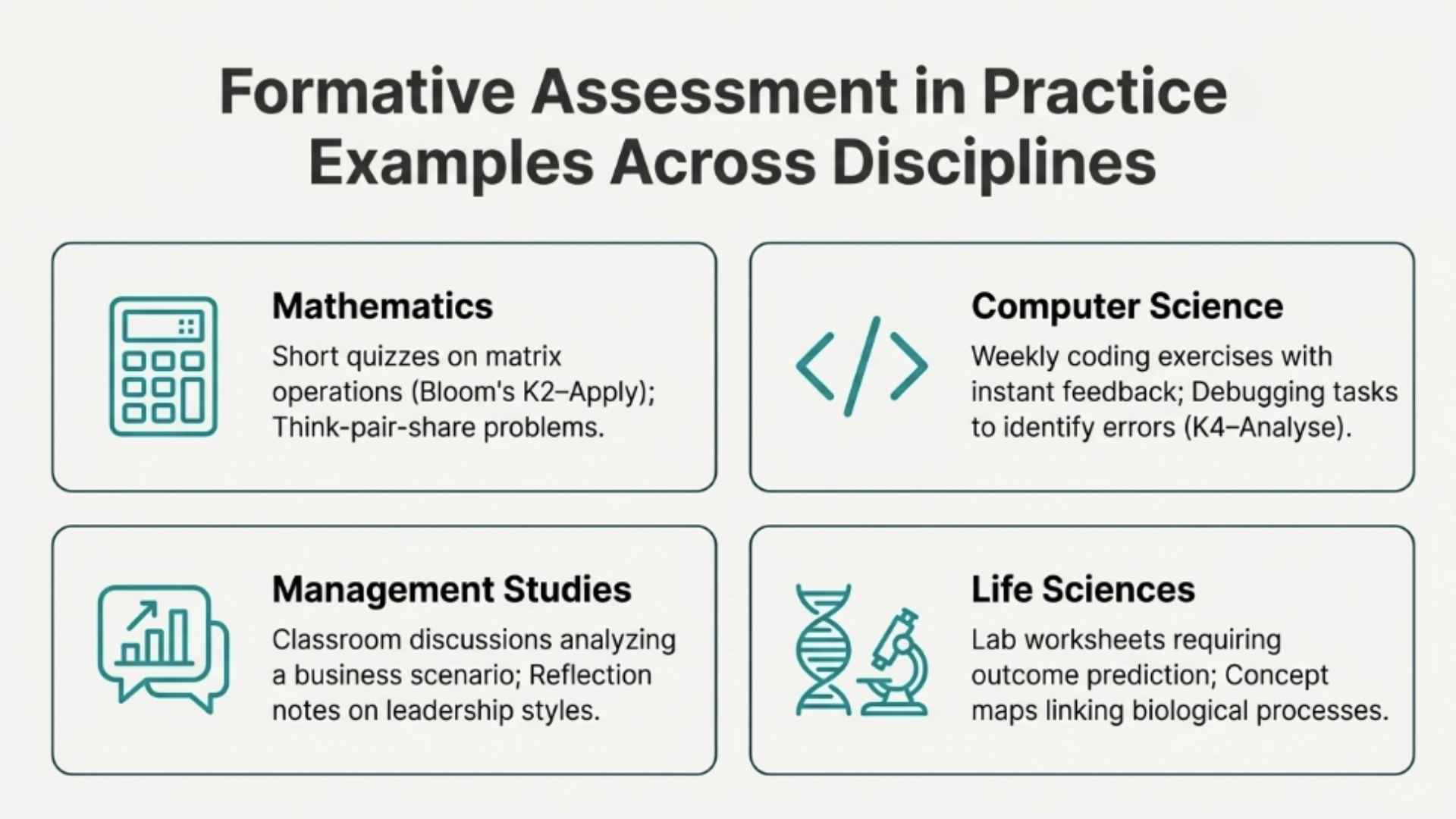 Mathematics
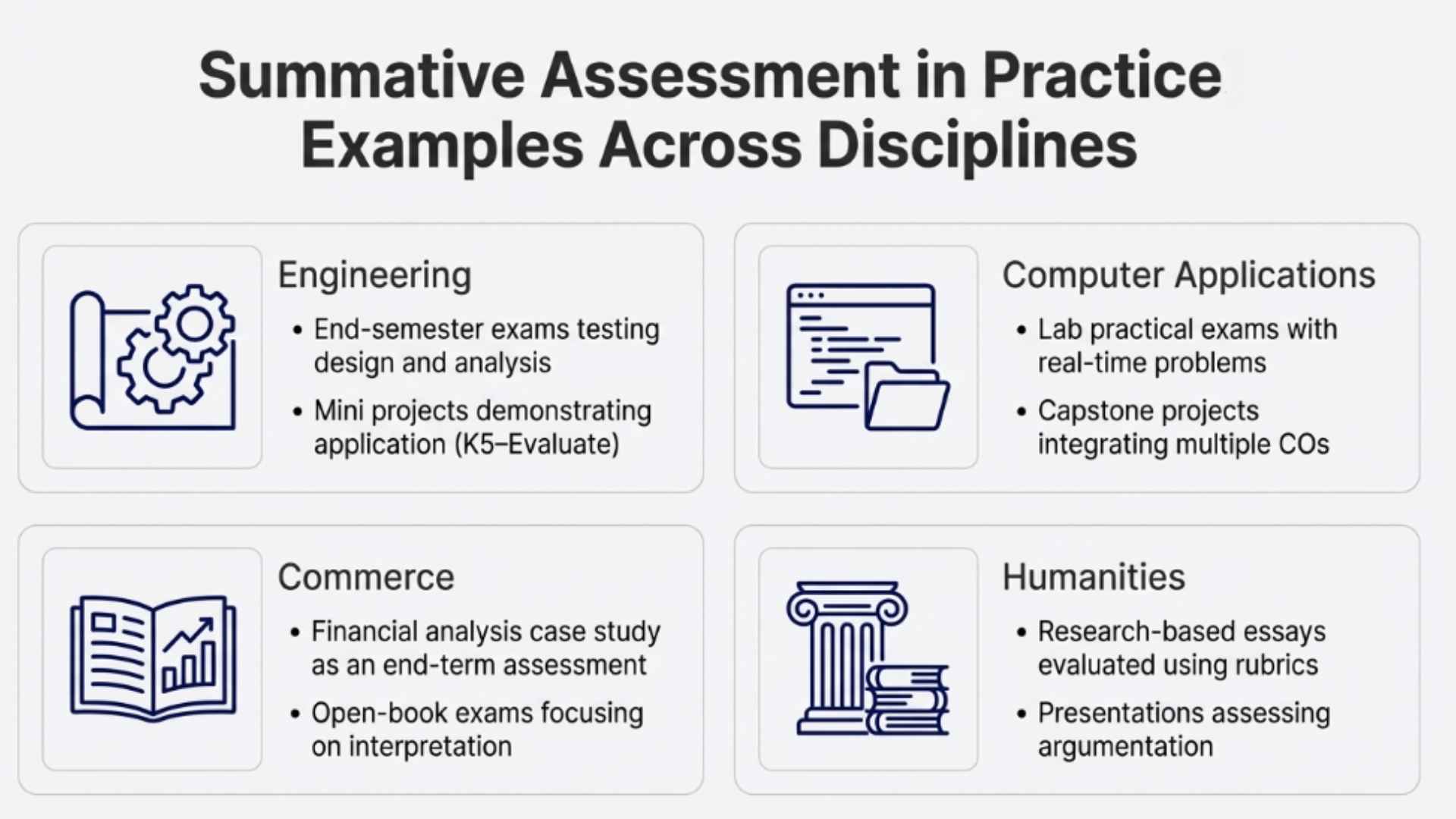 Engineering
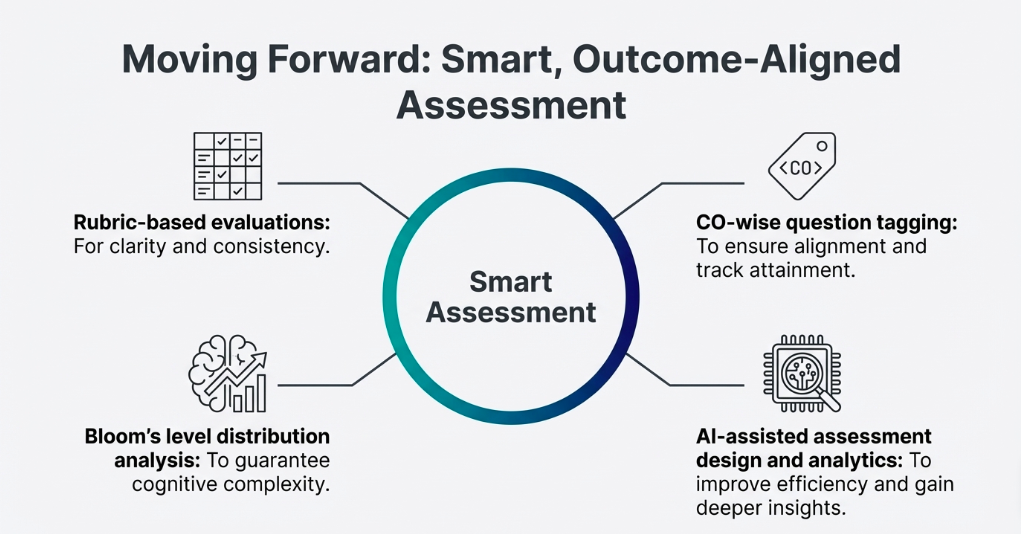 Yet, the philosophy remains traditional and timeless: Teach with care. Assess with clarity. Improve with evidence. When formative and summative assessments work together, education shifts from marks-driven to meaning-driven. And that’s where real outcomes happen. Author’s Note This article is grounded in practical OBE implementation experience across higher education institutions, aligned with accreditation frameworks and contemporary assessment research, while respecting long-standing pedagogical principles. [/fusion_text][/fusion_builder_column][/fusion_builder_row][/fusion_builder_container]