
Why Tier-1 NBA and OBE Go Hand-in-Hand
Tier-1 NBA Accreditation is specifically for autonomous institutions that enjoy curriculum flexibility. But autonomy brings responsibility, and that responsibility is fulfilled through OBE. Tier-1 accreditation reflects international alignment and curricular innovation and is recognised under the Washington Accord, which enables global mobility for engineering graduates. OBE-linked weightage in GAPC 4.0: 425/1000 marks, distributed across:- Curriculum design: 120 marks
- Teaching-learning strategies: 120 marks
- Assessment systems: 120 marks
- Continuous improvement: 65 marks
The Real Payoff: Why Tier-1 NBA and OBE Are Worth It
Tier-1 NBA Accreditation, powered by effective OBE implementation, delivers tangible value to autonomous institutions.- Global Recognition: Alignment with the Washington Accord ensures international degree equivalence.
- Better Rankings: Institutions see up to 35% improvement in NAAC scores and a boost in NIRF positioning.
- Government Funding: Preferred eligibility for grants under RUSA, TEQIP, and PM-USHA.
- Stronger Employability: OBE-led institutions report a 28% rise in graduate employability (AICTE, 2024).
- Industry and Alumni Connect: Accreditation fosters better placements, collaborations, and reputation.
- International Appeal: Greater traction from global faculty and students through quality assurance.
From Framework to Practice: What Institutions Must Do
#1. Start with the End in Mind
Design the curriculum backwards from graduate attributes.- PEOs (Program Educational Objectives): What students achieve 3–5 years post-graduation
- POs (Program Outcomes): Graduate abilities like ethics, critical thinking, problem-solving
#2. Track Everything with Data
OBE is not effective without evidence. Institutions must invest in data tracking mechanisms.- Use CO-PO attainment graphs to measure learning progress
- Leverage direct assessments like exams, rubrics, and project evaluations
- Conduct indirect assessments via student surveys, alumni feedback, and exit interviews
#3. Use Technology as a Catalyst
Digital tools do more than automate—they enable precision, consistency, and continuous improvement across teaching, assessment, and attainment tracking. The right technology stack can streamline OBE implementation at every stage:- QnSmart i: Generates CO-mapped question papers automatically
- questionpaper.ai: Supports Bloom’s taxonomy alignment and rubric-based assessment
- deQ OBE: For CO-PO attainment analysis and reporting
- LMS integrations: Tag activities and questions to COs and track learning outcomes
#4. Empower Faculty as OBE Curriculum Architects
Faculty play a pivotal role in ensuring the success of Outcome-Based Education—not just by delivering content, but by designing and continuously refining the teaching-learning process.- Design measurable and verifiable Course Outcomes (COs) aligned with Bloom’s Taxonomy
- Develop and implement learning activities that enable students to attain defined outcomes
- Align assessments with intended learning outcomes to ensure cognitive depth and relevance
- Map COs to Program Outcomes (POs) with documented rationale and supporting evidence
- Practice Assurance of Learning (AoL) by closing the feedback loop through systematic review of attainment data
- Participate in regular Faculty Development Programs (FDPs) focused on rubric design, attainment analysis, and Self-Assessment Report (SAR) documentation
#5. Institutionalise the Feedback Loop
Outcome tracking is meaningless without corrective action.- Revise the curriculum if COs weren't attained.
- Offer bridge courses or remediation programs
- Document all interventions and their impact in the Self-Assessment Report (SAR)
- Document changes for Criterion 8 (Continuous Improvement)
Common Pitfalls to Avoid
- Mapping COs to POs without logical alignment
- Using Bloom’s verbs mechanically without addressing the actual cognitive demand
- Treating SAR as a one-time formality instead of a dynamic self-reflection
Long-Term Strategy for Tier-1 NBA Readiness: Aligning with the Institutional Development Plan (IDP)
Achieving and sustaining Tier-1 NBA Accreditation is not a one-time project—it requires a strategic, phased approach grounded in long-term academic vision. A robust Institutional Development Plan (IDP) can serve as the guiding blueprint, ensuring all efforts—immediate, mid-term, and visionary—are aligned with national benchmarks and institutional aspirations.
Immediate Steps |
Mid-Term Milestones |
Visionary Goals |
|
|
|


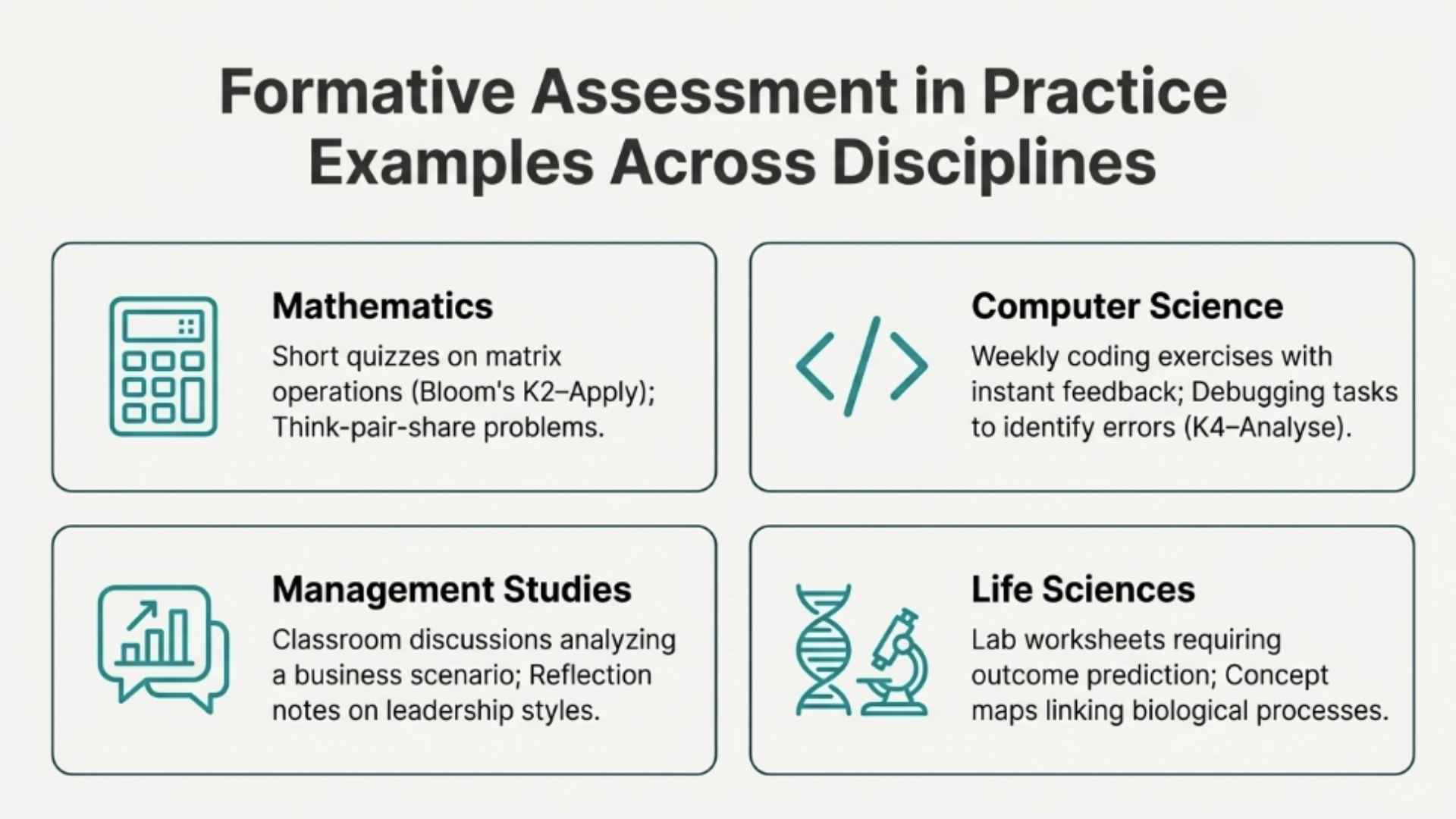 Mathematics
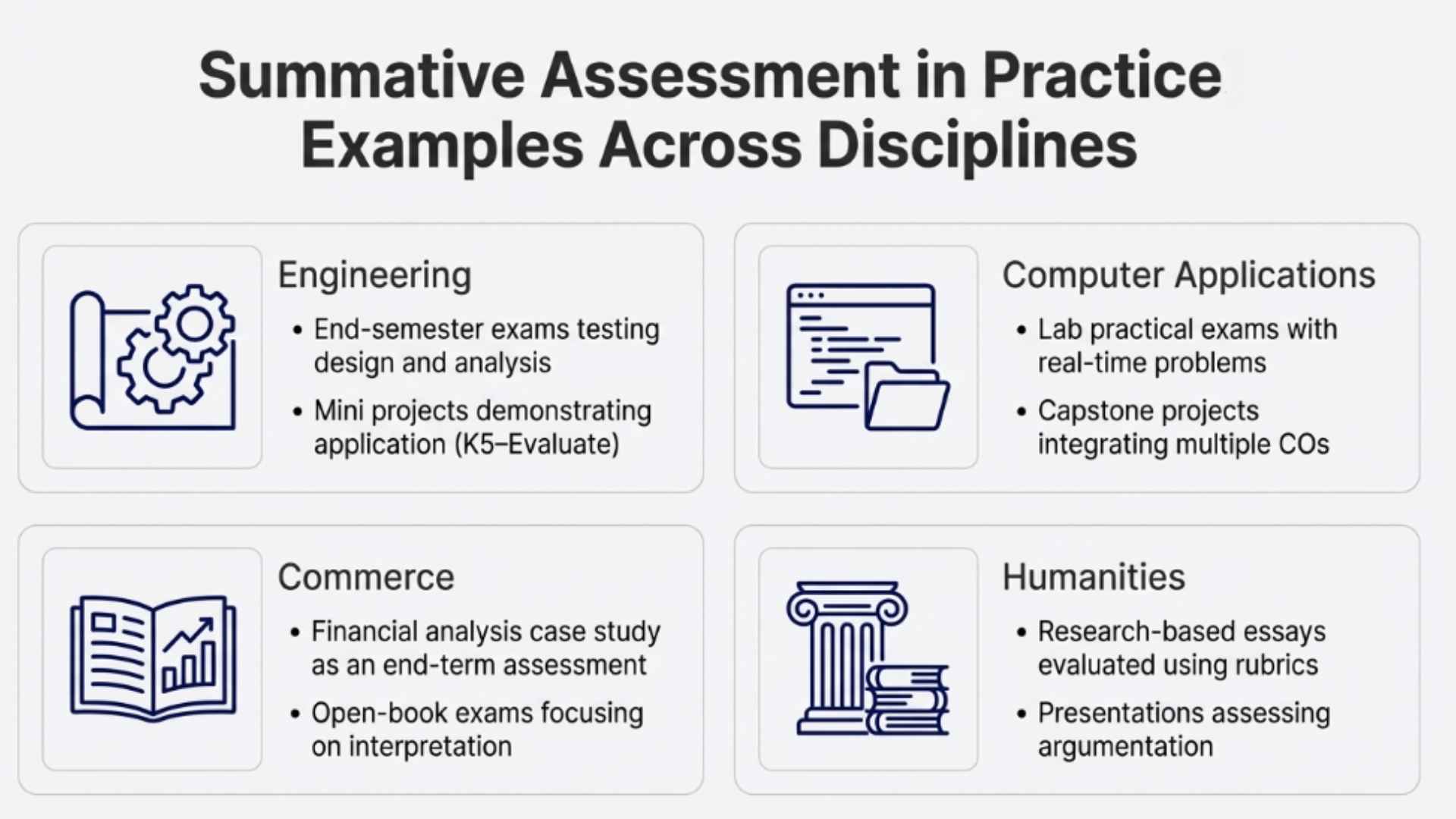 Engineering
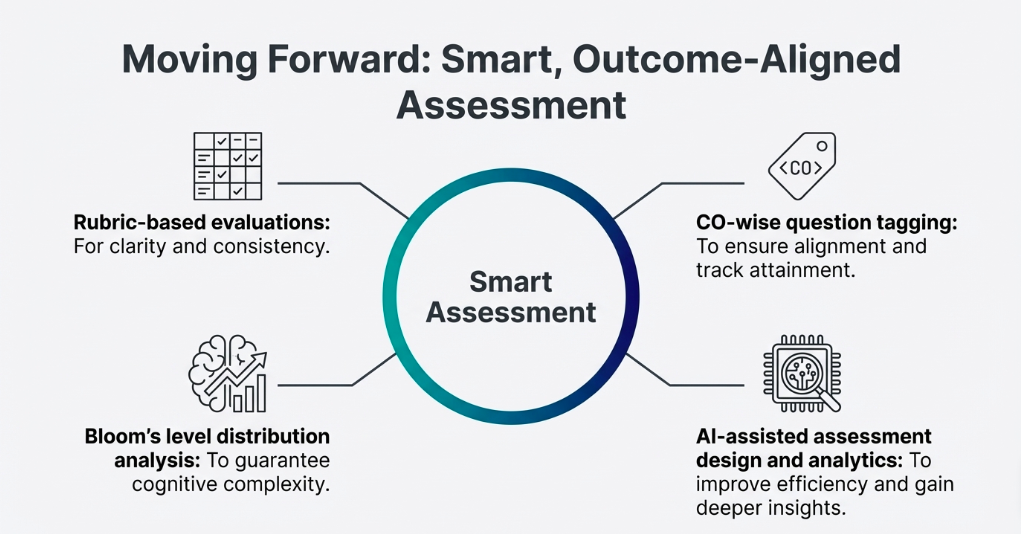 Yet, the philosophy remains traditional and timeless: Teach with care. Assess with clarity. Improve with evidence. When formative and summative assessments work together, education shifts from marks-driven to meaning-driven. And that’s where real outcomes happen. Author’s Note This article is grounded in practical OBE implementation experience across higher education institutions, aligned with accreditation frameworks and contemporary assessment research, while respecting long-standing pedagogical principles. [/fusion_text][/fusion_builder_column][/fusion_builder_row][/fusion_builder_container]