
The National Institutional Ranking Framework (NIRF) 2025 results are out, and the Management category provides a fascinating look at how India’s business schools are performing on a national scale. From the dominance of IIMs to the steady rise of private players, this year’s list reflects both continuity and change in India’s management education ecosystem. Why it matters: With over 7,600 institutions and 14,000+ applications across all categories, earning a spot in the Top-100 Management list is tougher than ever.
The Top 10 Management Institutes in India (2025)
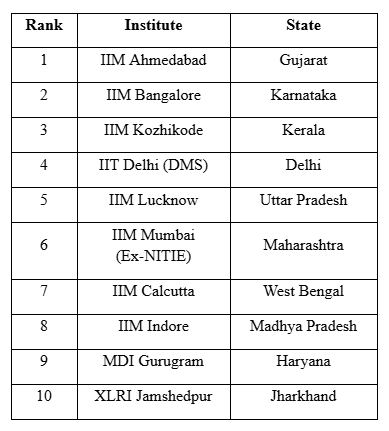 The podium is unchanged at the very top: IIM Ahmedabad (#1), IIM Bangalore (#2), and IIM Kozhikode (#3). IIT Delhi’s Department of Management Studies (#4) continues to be the strongest non-IIM player, while MDI and XLRI hold ground as top-tier private institutions.
How NIRF Measures Management Excellence
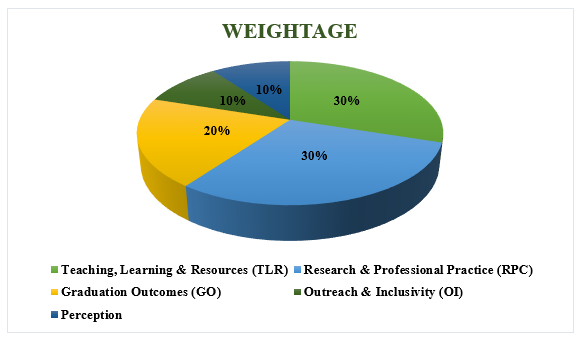 NIRF rankings are based on five pillars, each contributing to the final score:
 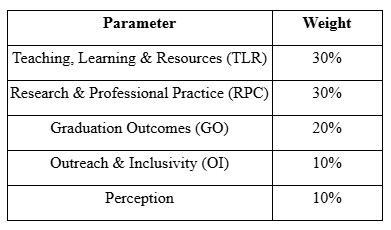 Balanced growth is essential. Strong rankings come from a mix of teaching quality, research output, placements, and brand reputation. A school cannot rely on just one factor.
State-wise Presence: Who Leads the Top 100?
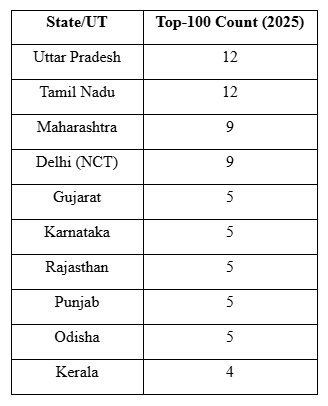
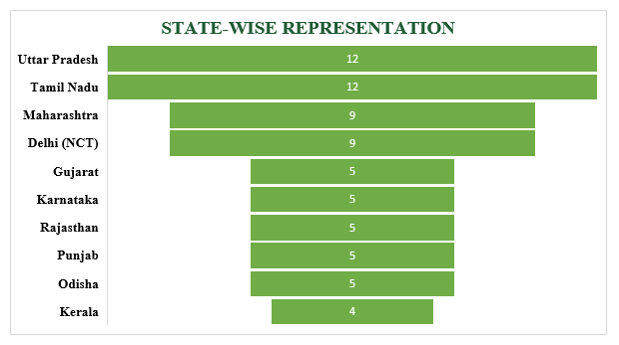 The distribution of institutes across states shows where India’s management education capacity is concentrated:
  Key highlights:
- Uttar Pradesh and Tamil Nadu lead the pack with 12 institutions each, reflecting strong public and private ecosystems.
- Maharashtra and Delhi follow closely with 9 institutions each, showing the influence of urban hubs.
- Kerala makes a mark with 4 entries, led by IIM Kozhikode (#3).
Interpretation: Northern states like UP and Delhi dominate in numbers, while southern states like Kerala and Tamil Nadu shine in quality, placing institutes in the very top ranks. Year-over-Year Changes (2024 → 2025) Competition is fierce, and small improvements or dips in placements, perception, or research output can shift rankings significantly.
Top Risers (Biggest Rank Improvements)
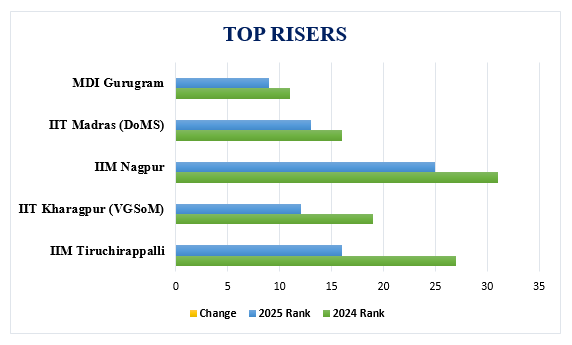
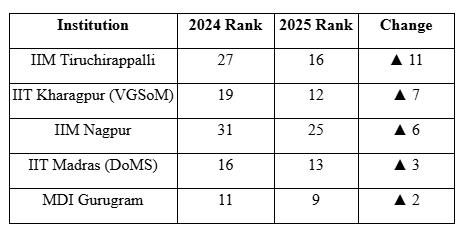 IIM Trichy’s jump (+11) is the biggest success story this year, reflecting strong improvements in placements (GO) and faculty research (RPC).
Top Fallers (Biggest Rank Drops)
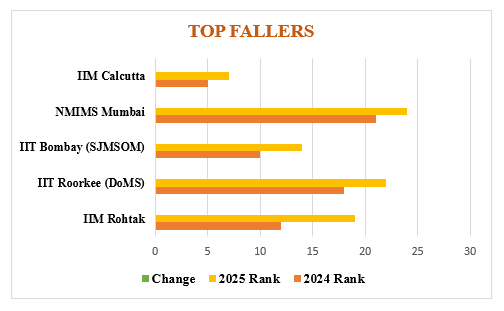
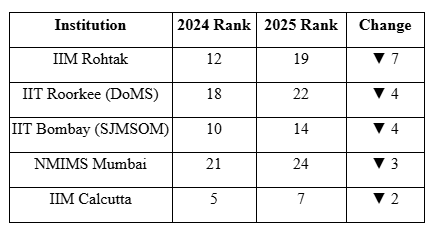 IIM Rohtak (-7) and IIT Bombay (-4) highlight how quickly rankings can change when there are fluctuations in placements or research scores. Composition of the Top-25
 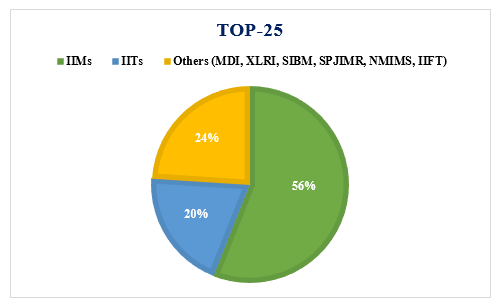 Which type of institutes dominate the elite ranks?
 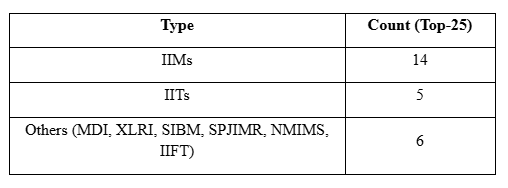 IIMs remain the clear leaders, but non-IIM private schools have carved out a consistent presence in the top quartile.
10 Key Takeaways
- IIM Ahmedabad continues its reign at #1, proving the value of sustained excellence in teaching and research.
- IIM Bangalore (#2) and IIM Kozhikode (#3) reaffirm South India’s growing leadership in management education.
- IIT Delhi (DMS) at #4 shows the advantage of tech-driven management programs.
- Uttar Pradesh and Tamil Nadu’s 12 institutes each reflect deep talent pools and balanced private-public mixes.
- IIM Trichy’s rise (+11) highlights how smaller IIMs are scaling up quickly.
- Private players like MDI, XLRI, SPJIMR, and SIBM continue to be trusted brands for students.
- Urban hubs like Mumbai and Delhi dominate the mid-table, thanks to corporate connectivity and industry access.
- Volatility at mid-level ranks (e.g., IIM Rohtak -7) shows that maintaining high placement performance is key.
- Kerala punches above its weight, with IIM Kozhikode cementing its position as a top-three institute.
- The future of rankings will depend on balanced growth: improving placements (GO), scaling research (RPC), and building strong faculty resources (TLR).
What This Means for Students and Institutions
- Students: Use rankings as one data point, but also consider course offerings, placements, specializations, and alumni networks.
- Institutes: Focus on sustainable improvements across all five NIRF pillars—especially placements and research, which drive rapid rank changes.
- Policy makers: Support underrepresented states with grants and incubation programs to broaden access to management education.
Final Thoughts
The NIRF 2025 Management Rankings highlight an ecosystem that is growing, competitive, and diverse:
- The IIMs continue to dominate, but private players are carving out stable positions.
- Emerging IIMs and state universities are showing rapid upward mobility.
Students now have wider choices across geographies and institutional types. This year’s rankings don’t just celebrate excellence—they map India’s management education future.


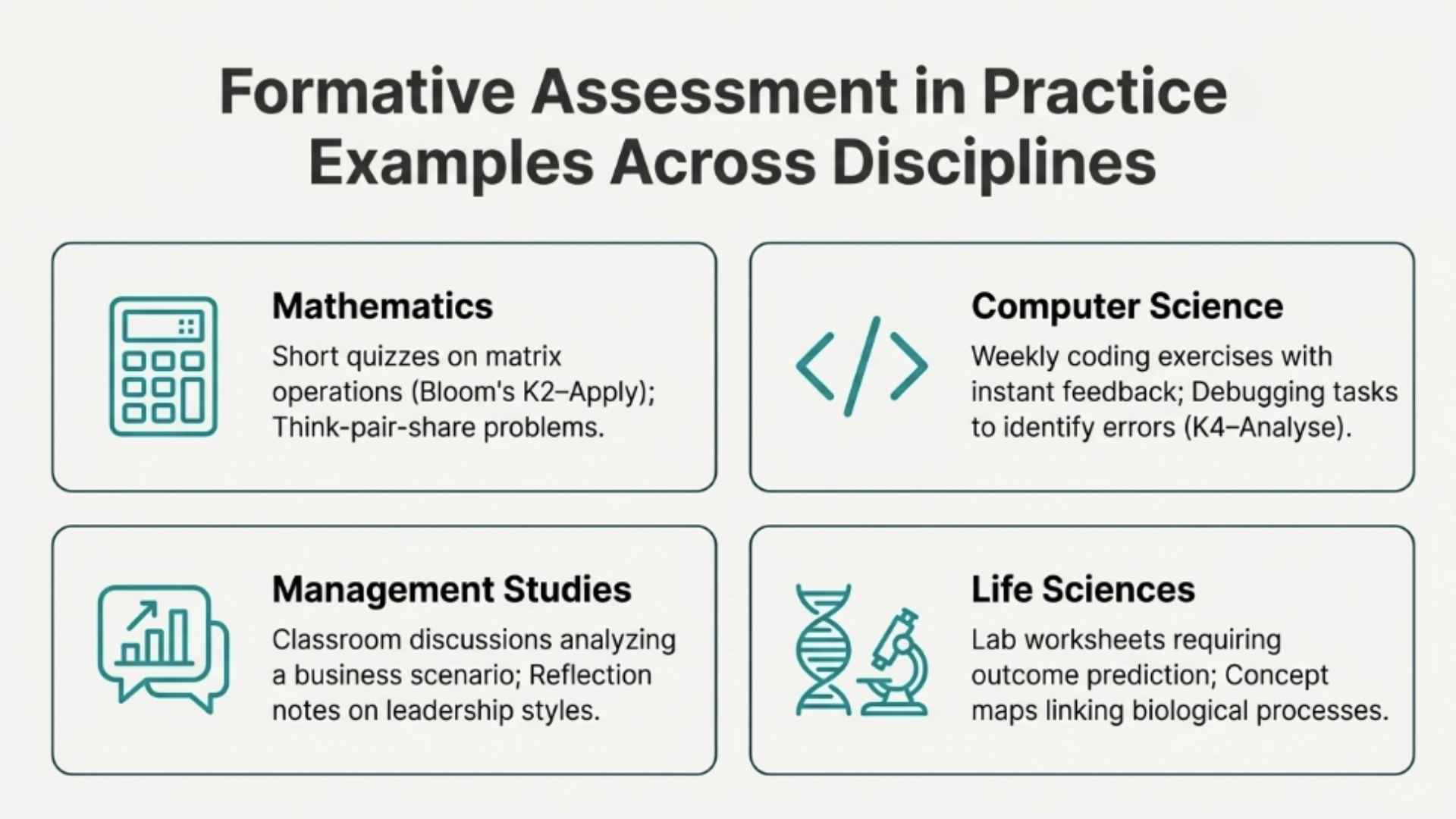 Mathematics
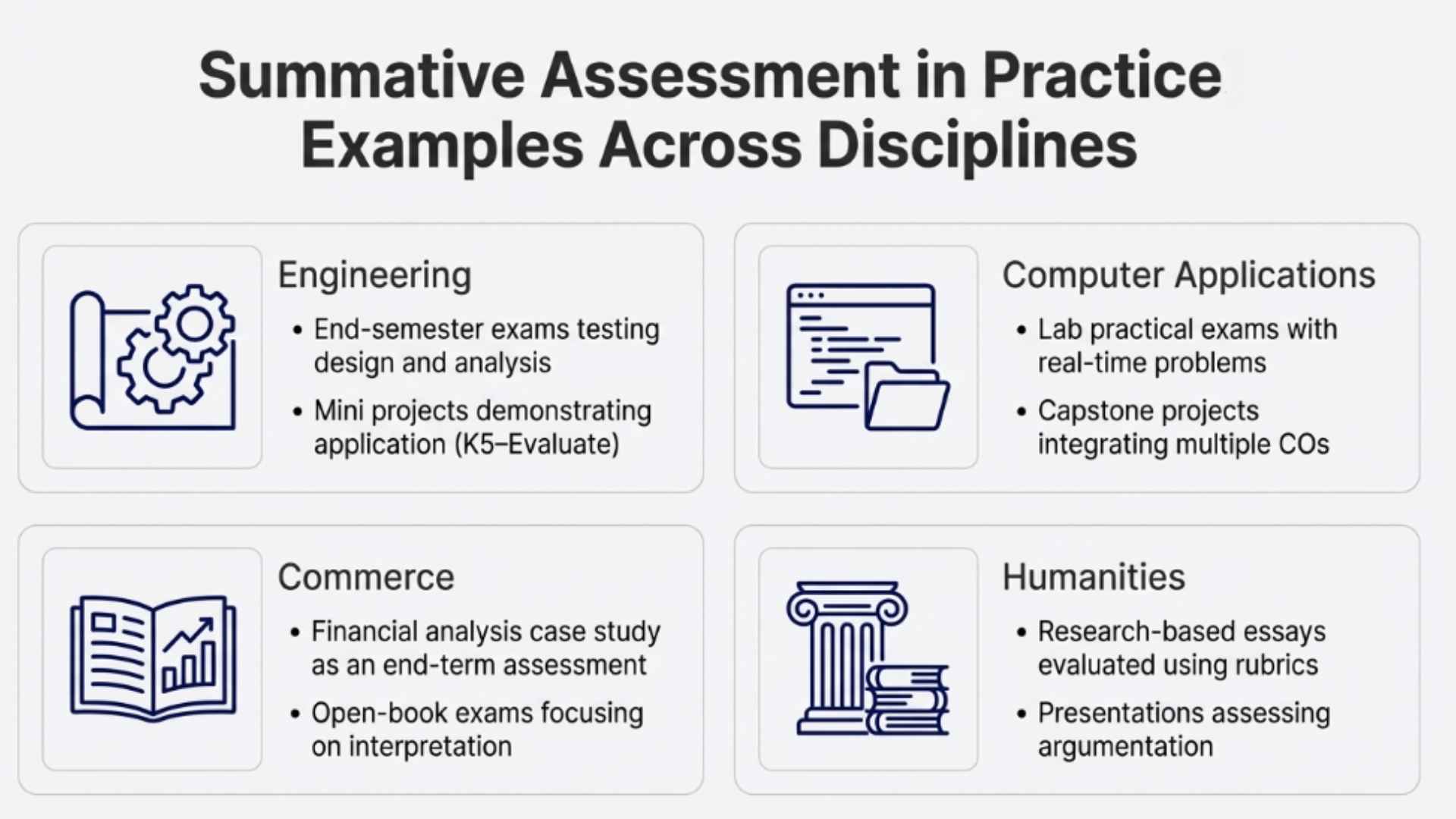 Engineering
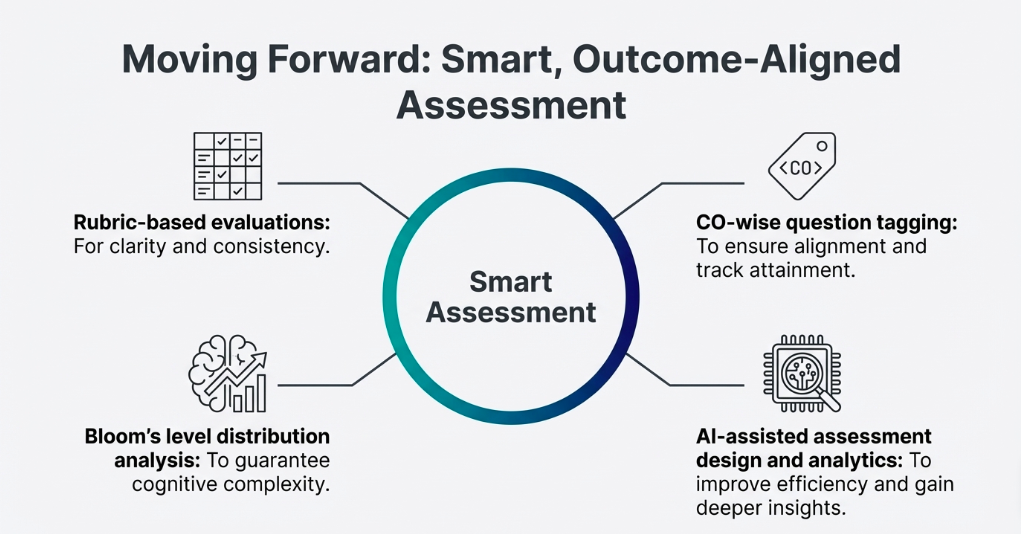 Yet, the philosophy remains traditional and timeless: Teach with care. Assess with clarity. Improve with evidence. When formative and summative assessments work together, education shifts from marks-driven to meaning-driven. And that’s where real outcomes happen. Author’s Note This article is grounded in practical OBE implementation experience across higher education institutions, aligned with accreditation frameworks and contemporary assessment research, while respecting long-standing pedagogical principles. [/fusion_text][/fusion_builder_column][/fusion_builder_row][/fusion_builder_container]