
The Vision Behind Micro-credentials
Prof. M. Jagadesh Kumar, UGC Chairman, emphasizes that these guidelines represent a critical step in equipping students with industry-relevant skills while fostering academic growth. According to him, India’s demographic dividend, characterized by its youthful population, holds immense potential for economic and global leadership. To unlock this potential, higher education must be evolved to meet the changing needs of industries and society. Microcredentials, as envisioned by the UGC, are short, targeted learning modules designed to enhance employability, upskill, or reskill learners in specialized fields. By incorporating these courses, HEIs can expose students to emerging domains such as artificial intelligence, data analytics, digital marketing, sustainable practices, and more.A Comprehensive Framework
The proposed guidelines offer a structured approach to implementing skill-based education:- Flexible Credit Allocation:
- For skill courses under the National Higher Education Qualification Framework (NHEQF):
- Theory: 1 credit = 15 hours
- Practical: 1 credit = 30 hours
- Experiential Learning: 1 credit = 40-45 hours
- For courses aligned with the National Skills Qualification Framework (NSQF):
- 1 credit = 30 hours, regardless of format.
- For skill courses under the National Higher Education Qualification Framework (NHEQF):
- Integration with Academic Curriculum:
- Up to 50% of total credits can be earned through skill-based courses or microcredentials.
- In Skill Universities, the skill component can constitute 60-70% of total credits with UGC approval.
- Collaborative Learning:
- Partnerships with industry associations such as FICCI, CII, and trade bodies will facilitate internships, skill-based projects, and experiential learning opportunities.
- Industry Participation:
- Indian enterprises and multinational companies can apply to the UGC for course approvals, ensuring alignment with global industry standards.
The Potential of Microcredentials
Microcredentials offer a unique opportunity to revolutionize higher education in India by:- Enhancing Employability: Courses focus on practical skills in high-demand areas like logistics, digital payments, and conflict resolution.
- Promoting Lifelong Learning: Short-term skilling, upskilling, and reskilling initiatives enable continuous personal and professional development.
- Fostering Innovation: Skill-based education prepares students to become innovators and leaders in a digitizing, environmentally conscious global economy.


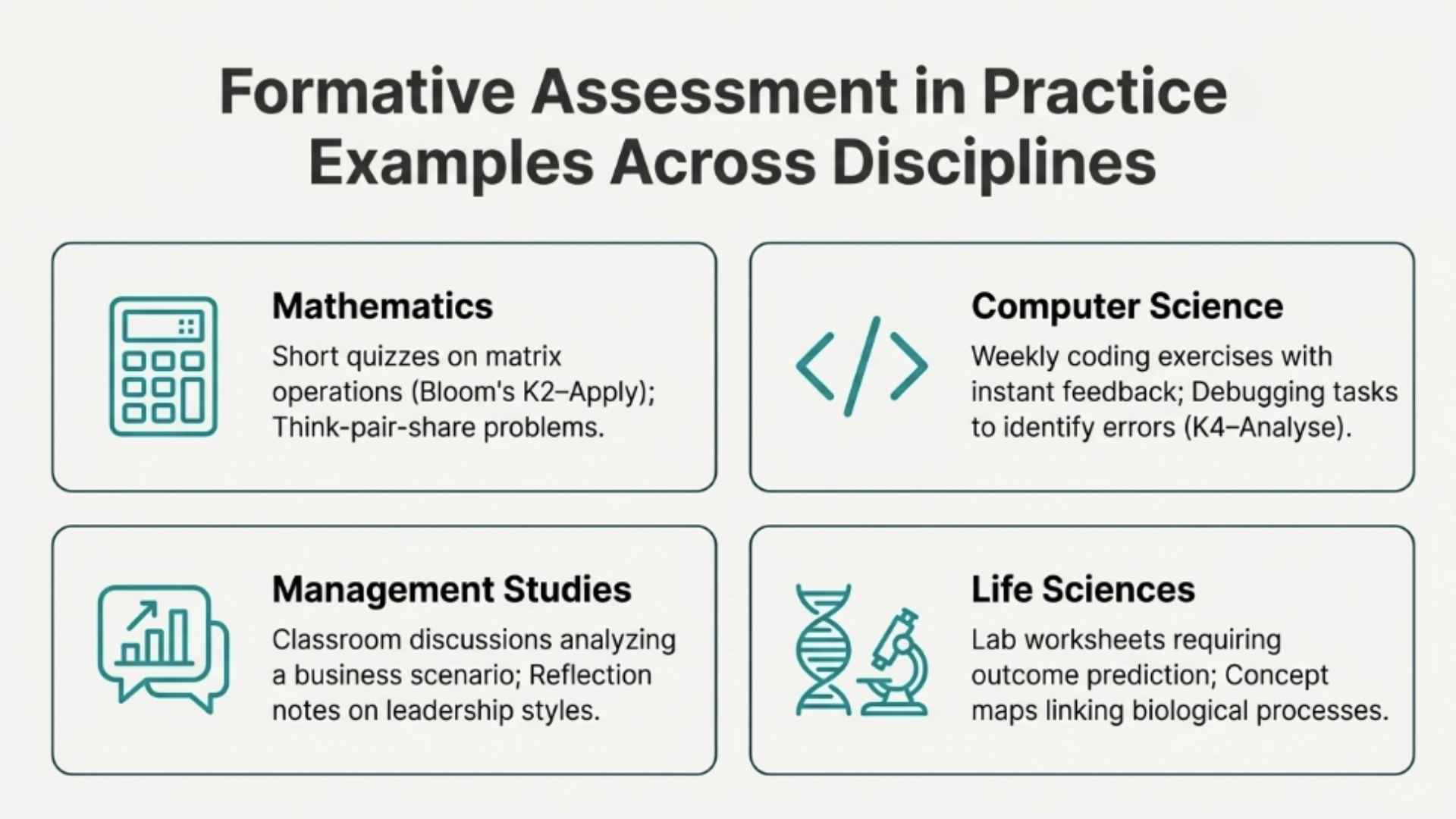 Mathematics
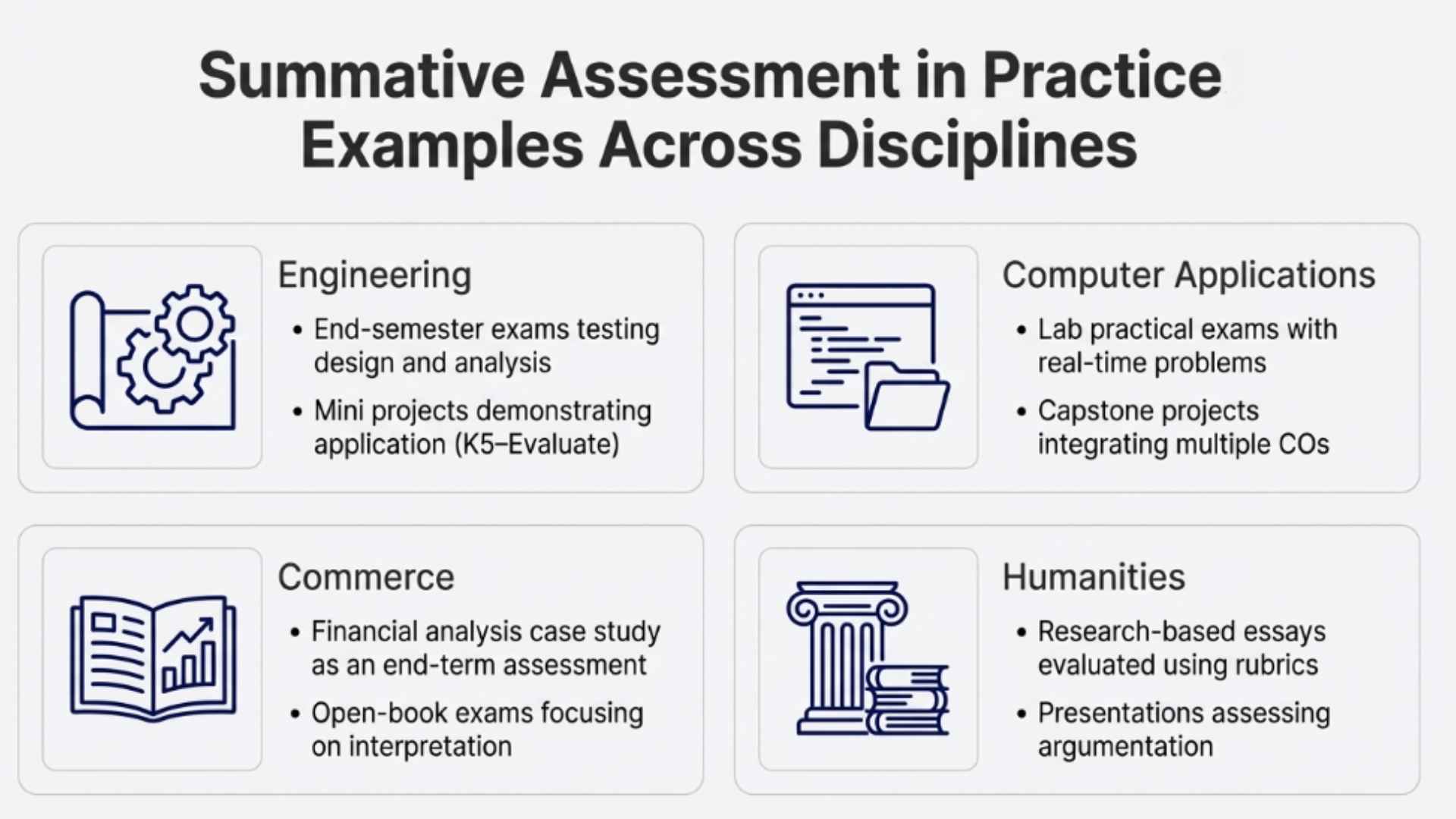 Engineering
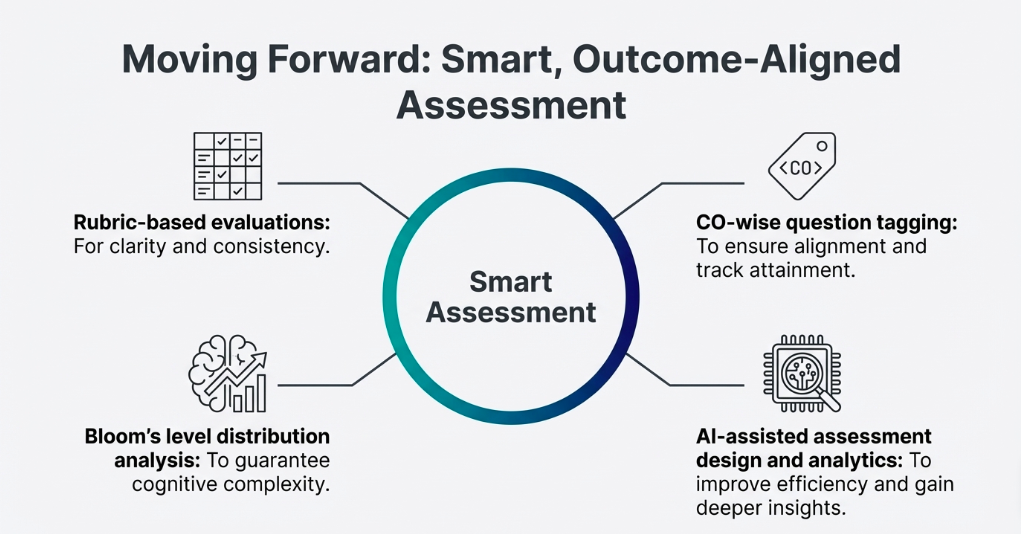 Yet, the philosophy remains traditional and timeless: Teach with care. Assess with clarity. Improve with evidence. When formative and summative assessments work together, education shifts from marks-driven to meaning-driven. And that’s where real outcomes happen. Author’s Note This article is grounded in practical OBE implementation experience across higher education institutions, aligned with accreditation frameworks and contemporary assessment research, while respecting long-standing pedagogical principles. [/fusion_text][/fusion_builder_column][/fusion_builder_row][/fusion_builder_container]