
Do I Truly Understand My Programme and Course Outcomes?
This is where Curriculum Design begins. A well-structured curriculum isn’t just a list of topics — it’s a deliberate map from Programme Outcomes to Course Outcomes, with each element aligned to industry needs and future skills. Too often, outcomes are written for compliance, not clarity. If you can’t connect a CO to a real-world skill or workplace competency, it’s just ink on paper. The 2025 shift: Outcomes are becoming currency in the job market. Recruiters and accrediting bodies are asking not just what your students learned, but how you can prove it. AI-based mapping tools can now align outcomes with Bloom’s taxonomy, industry frameworks, and even specific skill benchmarks from platforms like NASSCOM’s FutureSkills Prime. If your outcomes don’t translate to employable skills, your OBE framework is running on fumes.Do My Teaching Strategies Match the Desired Outcomes?
This is where Student-Centric Learning & Continuous Improvement comes alive. Matching teaching strategies to outcomes means choosing methods that engage students as active participants — problem-based learning, flipped classrooms, industry simulations — and then iterating based on feedback and performance analytics. If you want critical thinkers, you can’t rely solely on PowerPoint lectures. If you want innovators, you can’t spoon-feed every step. Strategies worth embracing in 2025:- Flipped classrooms for deeper pre-class preparation.
- Problem-based learning where the “answer” isn’t in the textbook.
- AR/VR simulations for lab-heavy or conceptually abstract courses.
- Microlearning modules – short, high-impact lessons that can be revisited anytime.
LMS analytics can now show exactly which parts of your lecture lose student engagement and which activities boost attainment. Data doesn’t lie. Use it. Am I Designing Assessments That Actually Measure Outcomes?
Last semester, Professor Meera gave her final-year AI students what she thought was a challenging exam: 60 marks, closed-book, strict proctoring. Everyone scored above 75%. She felt proud… until a week later, when a company visited campus for placements. The recruiter handed the candidates a real-world task: "Design a basic chatbot that can answer FAQs for a college website. You have 90 minutes." The result? Most of those same top scorers struggled to even set up the environment. That’s when it hit her: her assessments had been testing memory, not mastery. This is the OBE trap. You might have well-written Course Outcomes, but if your assessments don’t test the skills and competencies they promise, the alignment is broken. Here’s where technology can quietly take the heavy lifting off faculty shoulders. Modern OBE-aligned assessment platforms now let you:- Build question banks mapped to COs from day one.
- Check every question against the intended Bloom’s taxonomy level.
- Auto-generate balanced, criteria-referenced question papers in minutes—cutting bias and boosting quality.
Am I Tracking and Improving Attainment Effectively?
Continuous improvement depends on continuous tracking. OBE isn’t a “submit it and forget it” model; it’s a living loop: plan, measure, refine, repeat. Too often, faculty discover low attainment after final exams. By then, it’s too late to intervene. Today’s OBE implementation is no longer limited to end-of-semester attainment reports. Advanced analytics platforms now enable:- Tracking attainment at module and even sub-module levels.
- Using predictive models to flag at-risk students early.
- Visualising CO–PO achievement in real time through intuitive dashboards.
Am I Engaging Stakeholders in the OBE Cycle?
Here’s where Documentation & Accreditation Readiness earns its place. Accreditation teams no longer just check for documents; they look for living proof of an active, responsive OBE cycle. The best institutions involve:- Students in self-assessment, helping them take ownership of learning.
- Employers in validating curriculum relevance.
- Alumni in bridging the academic–industry gap.


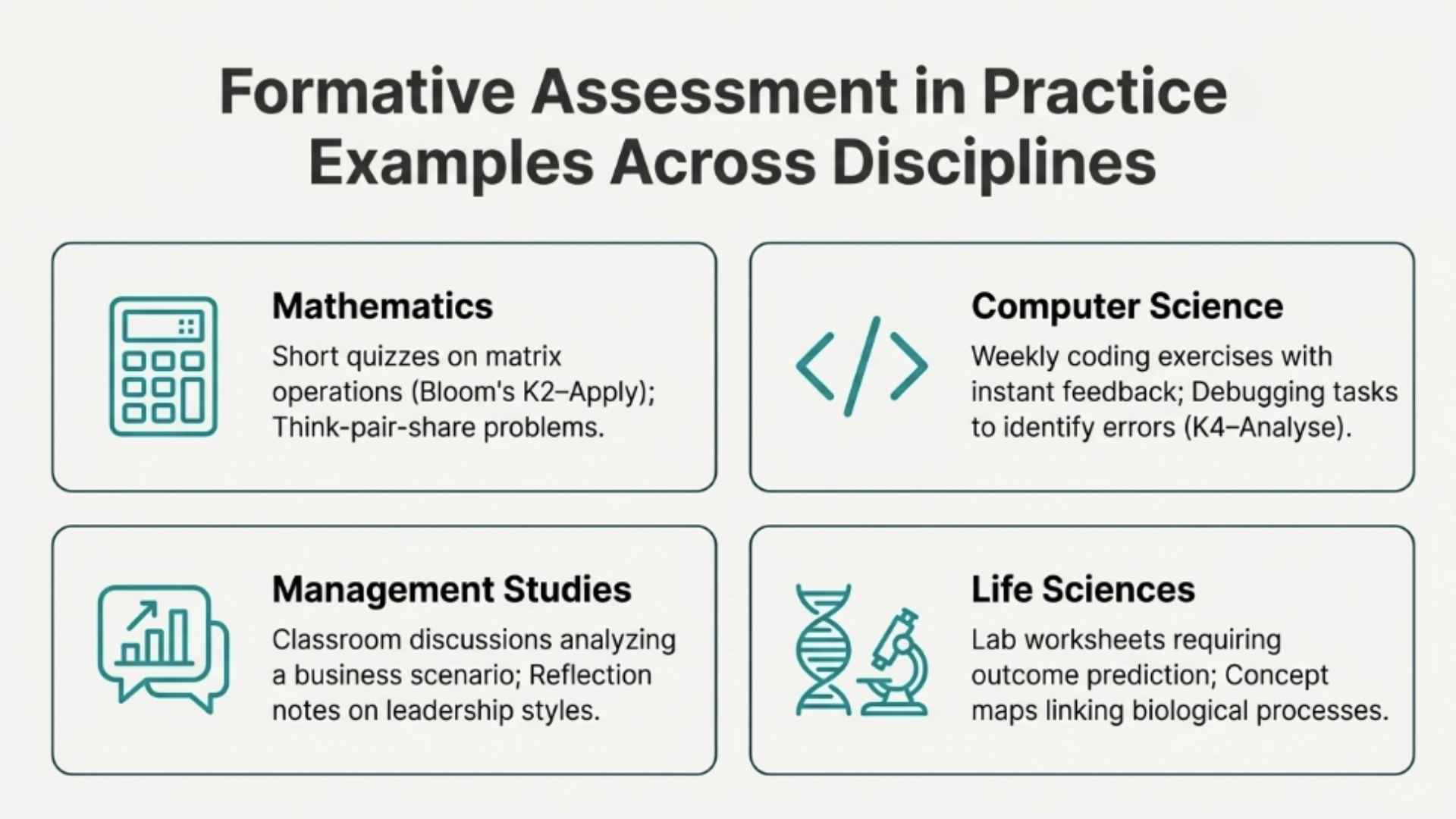 Mathematics
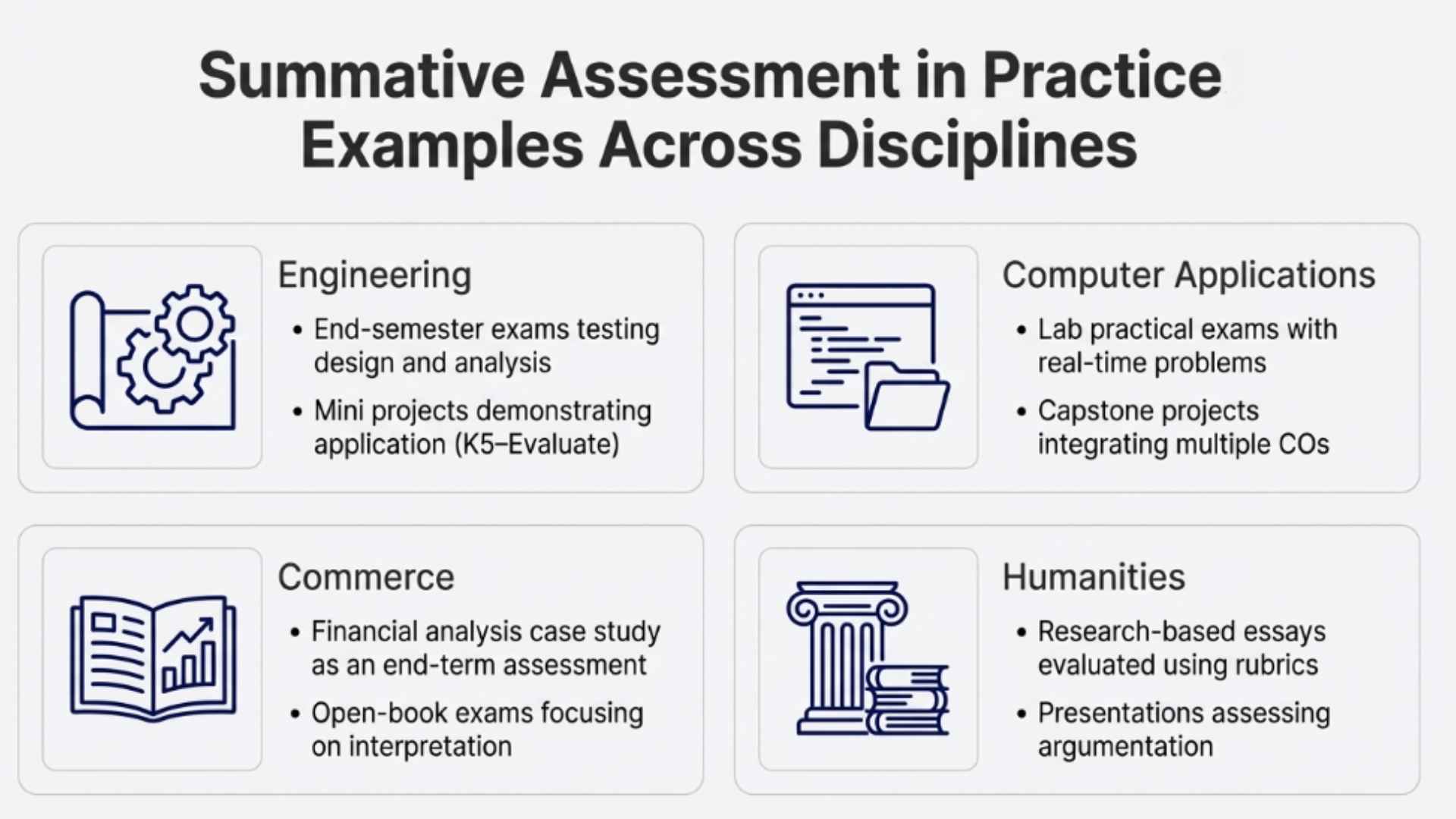 Engineering
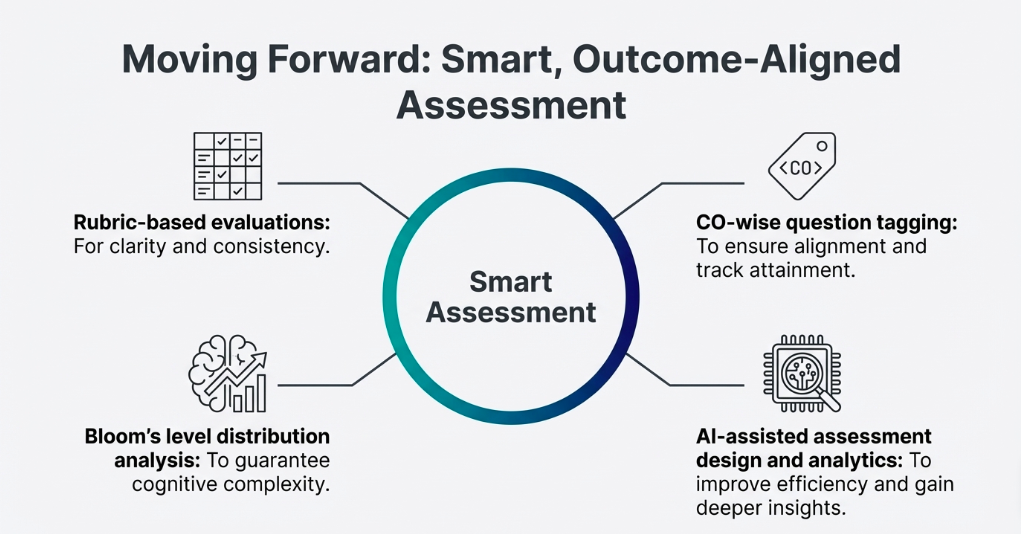 Yet, the philosophy remains traditional and timeless: Teach with care. Assess with clarity. Improve with evidence. When formative and summative assessments work together, education shifts from marks-driven to meaning-driven. And that’s where real outcomes happen. Author’s Note This article is grounded in practical OBE implementation experience across higher education institutions, aligned with accreditation frameworks and contemporary assessment research, while respecting long-standing pedagogical principles. [/fusion_text][/fusion_builder_column][/fusion_builder_row][/fusion_builder_container]