Knowledge Hub

You may also like

Related posts

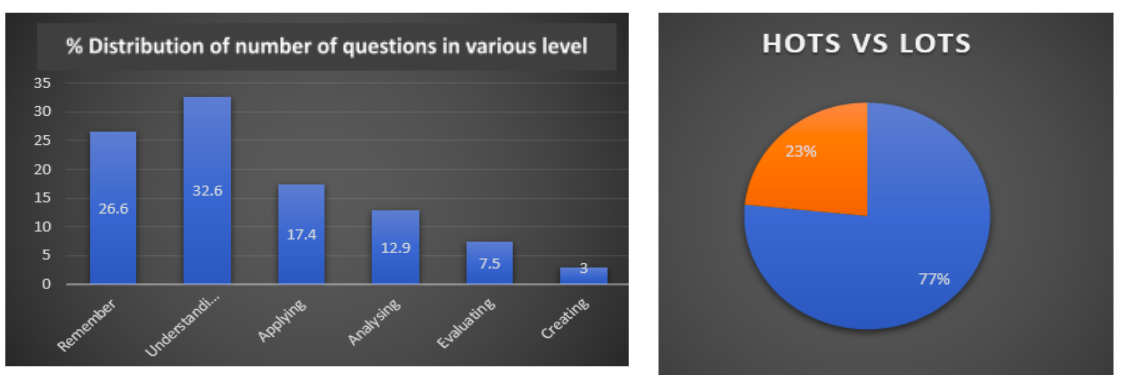
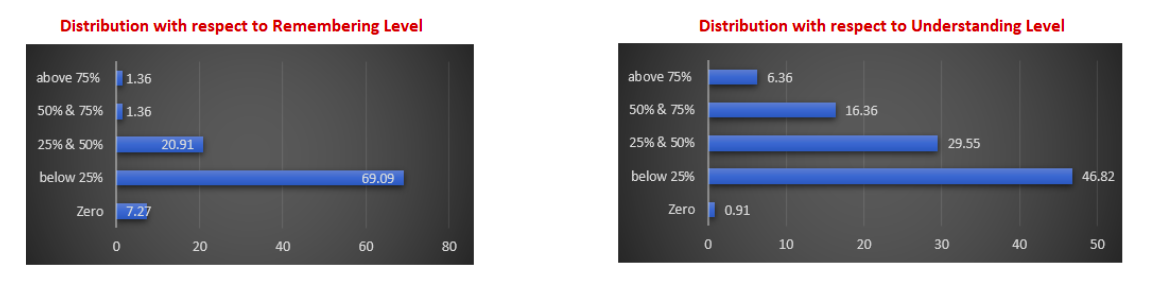
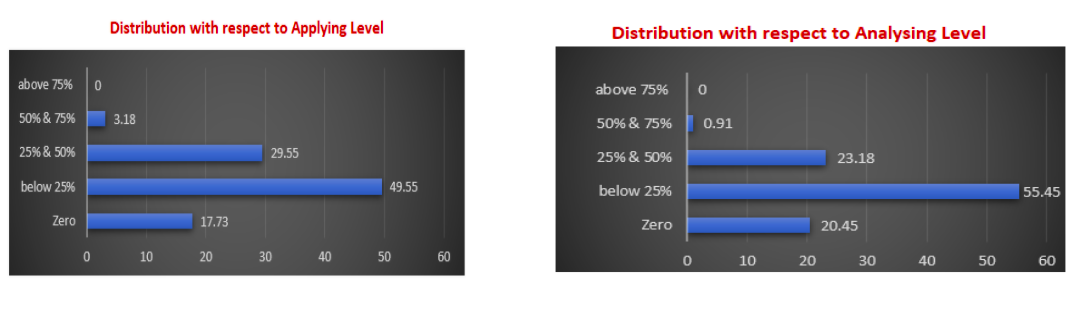
  • A study on the quality of University Question Papers in line with Bloom’s Taxonomy [fusion_builder_container type="flex" hundred_percent="no" equal_height_columns="no" hide_on_mobile="small-visibility,medium-visibility,large-visibility" background_position="center center" background_repeat="no-repeat" fade="no" background_parallax="none" parallax_speed="0.3" video_aspect_ratio="16:9" video_loop="yes" video_mute="yes" border_style="solid"][fusion_builder_row][fusion_builder_column type="1_1" type="1_1" layout="1_1" background_position="left top" border_style="solid" border_position="all" spacing="yes" background_repeat="no-repeat" margin_top="0px" margin_bottom="0px" animation_speed="0.3" animation_direction="left" hide_on_mobile="small-visibility,medium-visibility,large-visibility" center_content="no" last="true" hover_type="none" background_blend_mode="overlay" first="true" min_height="" link=""][fusion_text]The quality of an education system to a greater extent depends on the standard of its assessment practices. When the standards of assessments are poised at a higher level of learning, then obviously the curriculum and the learning experience should keep in pace with the level of evaluation standards. Hence it is truly said that assessment is an engine that drives the students' learning. One of the common recommendations by several committees on examination reform do insist that the Higher order thinking skills of the scholars need to be tested especially at higher education level. In this context it seems more relevant to conduct a study on to what extent the Indian University and Higher Education systems endorse this policy. St. Philomena’s (Autonomous) College, Mysore in collaboration with ipsr solutions limited had conducted a National Level FDP program on Outcome Based Education. More than 1000 teachers participated from almost all states of India. One of the sessions was on Bloom's Taxonomy and the teachers have submitted an activity named – Question paper analysis intended to analyze one of the previous year’s University question papers in their subject in line with the cognitive domain of Bloom's Taxonomy. A sample of 220 reports of analysis from various teachers of different states were randomly selected and analysed. The major observation of the Analysis is given below: Question Paper Analysis 1. It is observed that an average of 77% of the questions are from Lower Order Thinking Skills (LOTS). While the Higher Order Thinking Skills (HOTS) like Analytical, Evaluation type and creating type questions are much less. 2. It is further observed that when considering the average number of questions from various level of bloom's taxonomy maximum number of questions are from conceptual level and remembering level, that is 59.2% of the questions are direct and of very lower order as per Bloom’s Taxonomy. 3. It is found that 30.3% of the questions on an average is testing the student’s learning in application of the concepts in relevant situations and their ability to analyze a situation and identify the relationship between various components involved in the situation. 4. It is also observed that an average of 3% questions are from create level which are normally from arts related discipline. 5. Considering the average weightage of marks related to various levels of learning it is observed that 69% of marks are related to Lower Order Thinking skill (LOTS) questions. Question Paper Analysis on FDP Report 7. It is noted that 7.27% of questions papers analysed do not have any question from remembering level. 69.09% of the question paper has less than 25% questions from the remembering level. 8. 22.7 % of the question paper is having more than 50% of questions from understanding level, while 46.82% of the question paper is having less than 25% of questions from understanding level. Also less than 1% of the question paper is not having any questions from understanding level. Applying level and Analysis level in Question Paper Analysis 9. 17.73% of the question papers do not have any questions from application level and 20.45% of question papers do not have any questions from analytical level. 10. Only 3.18% percent of the question paper is having more than 50% of questions from application level and less than 1% of the question paper is having more than 50% of analytical level questions. 11. 79.1% of question papers have only less than 25% of questions from application level and 78.63% of question papers have only less than 25% of analytical level questions. 12. 42.73% of question papers do not have any questions from evaluation level and 67.73% of question paper do not have any create level questions 13. It is also noted that 0.91% of question papers are having create level questions in a range of 25% to 50%. Link to detailed analysis[/fusion_text][/fusion_builder_column][/fusion_builder_row][/fusion_builder_container]
    25 September 2021
  • Innovative Practices in Teaching and Learning [fusion_builder_container type="flex" hundred_percent="no" equal_height_columns="no" hide_on_mobile="small-visibility,medium-visibility,large-visibility" background_position="center center" background_repeat="no-repeat" fade="no" background_parallax="none" parallax_speed="0.3" video_aspect_ratio="16:9" video_loop="yes" video_mute="yes" border_style="solid"][fusion_builder_row][fusion_builder_column type="1_1" type="1_1" background_position="left top" border_style="solid" border_position="all" spacing="yes" background_repeat="no-repeat" margin_top="0px" margin_bottom="0px" animation_speed="0.3" animation_direction="left" hide_on_mobile="small-visibility,medium-visibility,large-visibility" center_content="no" last="no" hover_type="none" min_height="" link=""][fusion_text]

    Abstract

    This article describes innovative practices in teaching and learning. Innovative practices in teaching and learning have a positive impact on the performance of students’ diversity. The main aim of this article is to discuss various practices in teaching and learning which are considered innovative.

    Keywords – innovative practices, learning, teaching.

    Introduction

    Classrooms nowadays are exemplified by student diversity. The students in universities are diverse in different aspects such as culture, religion, family background, region, and schools where they have been studying (this is very important in the Indian scenario). Due to such diversities, students’ learning needs are also becoming increasingly diverse. A new challenge is to look for teaching ways that can address their needs. To respond to such diverse needs of the students at higher educational levels, different innovative teaching and learning strategies and methods are being used by the teachers in their classes. Since the last three decades, innovative teaching methods to deal with the diversity of today’s students are widely being used worldwide.

    In recent decades, global trends in cultural and economic development have also brought forth reforms in educational paradigms. These reforms have been accompanied by changes in the ways educational practitioners or educators design the curriculum. Compared with subject-centered approaches, learner-centered and problem-centered designs are often described as having greater potential to impart to the next generation. Over the years, there has been a big change in the thinking process of educational theorists. Major policies are more concerned about equality of opportunity for education and employment opportunities for graduates (Teichler, 2004).

    DISCUSSIONS

    In all spheres of human life and society general civilizational trends of development, typical for the XXI century, strengthen themselves increasingly. First of all, this is a trend of convergence of nations, people state through the creation of common economic, information space, and considering the demands of the globalized world.

    Worldwide government and private education institutions are focusing on the need of meeting the diverse needs of students, and they are more focused on learner-centered teaching. Teaching methods and strategies are more flexible now. There seems to be a close interrelation between the diversification and flexibility patterns of higher education. The more diversified and flexible the higher education systems are, the more they will exercise a universal access policy to meet the diverse needs of the students.

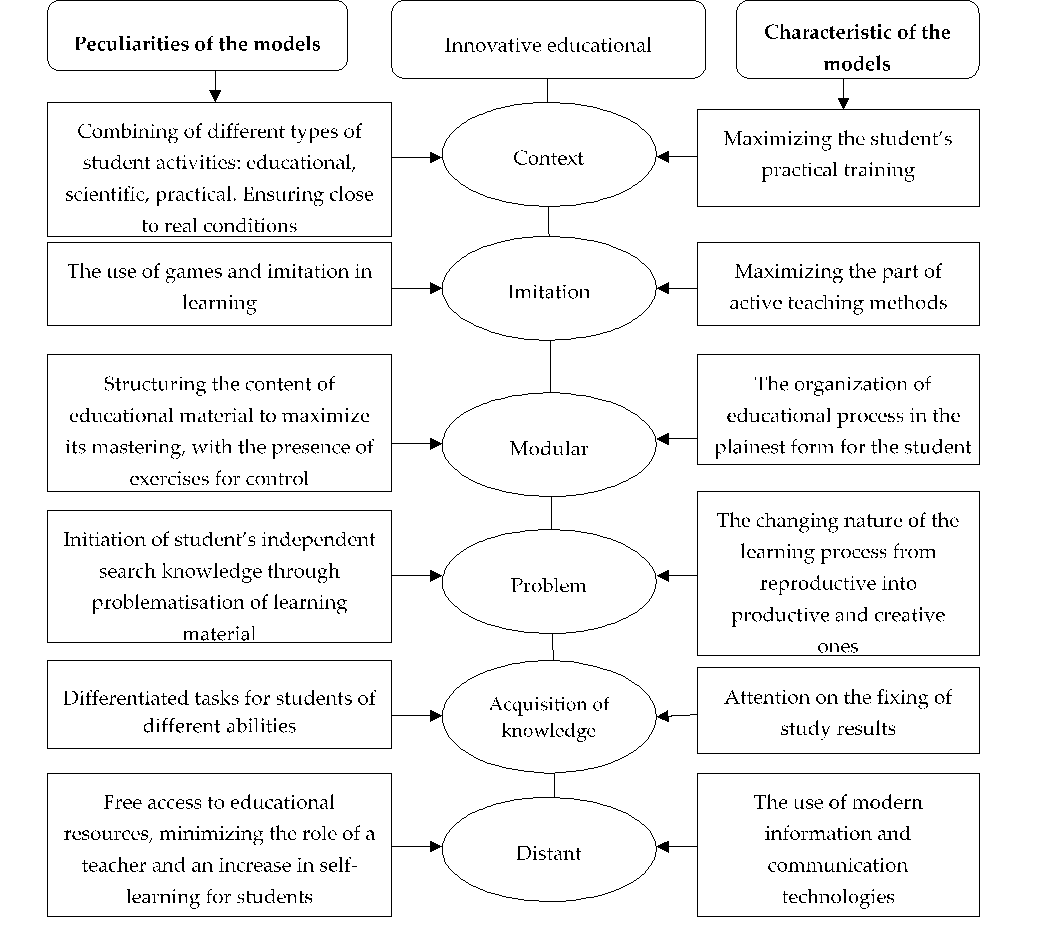
    Characteristics of innovative education models.

    To keep students from various sufferings a teacher should have a flexible and creative mind. Students increasingly demand flexibility from their institutions (McDonald & Reushle, 2002). Flexibility is a key factor in effectively catering to the learning needs of diverse student cohorts (Yorke & Thomas, 2003). In terms of how flexibility, variety, and choice might be achieved while maintaining appropriate standards, the use of technology, and a variety of teaching strategies, and choice and flexibility in the assessment are required.

    Torres (2001) and King (2011) emphasize the need for better teacher training, in-service training, and preservice training worldwide, which has been reflected in conferences of “education for all” background documentation. It is very important to have trained teachers at higher educational levels who can use different innovative teaching methods by using their skills to make students get ready for future challenges.

    The use of innovative teaching and learning strategies has been a hot topic for the last decade. Creative and skilled teachers are being found using different innovative teaching methods at higher education levels. Many studies consider creativity as a personal trait and intellectual ability of different individuals, associating creativity with genius and intelligence (Albert & Runco, 1999).

    The focus of innovation in teaching and learning is based on the trust that every student has the capacity to learn and be successful in life. A teacher should perceive each student as possessing unique personality characteristics that can be more polished by using creative and innovative teaching methods. Having an awareness of the process of learning is very helpful for teachers to identify the problems students are facing in some of the subjects (Westwood, 2013).

    Innovative teaching involves using innovative methods and teaching-learning materials for the benefit of students (Mandula, Meda, & Jain, 2012). According to Anderson and Neri (2012), innovative teaching and learning can involve virtual labs: learning activities based on real-life problems; learning environments with equipment, furnishings, materials, and audio-visual resources; and learning guides for students and the teacher. All of these are combined with methodologies that promote the use of active teaching techniques that help teachers develop their students’ learning abilities. The key advice to teachers and students from diverse backgrounds are to know and respect their students; offer students flexibility, variety, and choice; make expectations clear; use accessible language; scaffold students learning; be available and approachable to guide student learning; and be a reflective practitioner (www.lowses.edu.au).

    There are many strategies, such as personalization, small learning communities, student advisories, multidisciplinary curricula, peer tutoring, peer instruction, and team teaching, which are used by teachers at different higher levels of education. They may be personalization, small learning communities, student advisories, multidisciplinary curricula, peer tutoring, peer instruction, team teaching, and so on. The rapid growth of availability and competence of emergent technologies have provided many ways and methods of making the classroom teaching the innovative one (Hussain, Niwaz, Zaman, Dahar, & Akhtar, 2010).

    Top 5 Innovative Teaching Strategies

    • Differentiated Instruction: Learning Stations. Differentiated instruction strategies allow teachers to engage each student by accommodating their specific learning styles.
    • Cooperative Learning: The Jigsaw Method.
    • Utilizing Technology in the Classroom.
    • Inquiry-Based Instruction
    • Graphic Organizers

    10 Innovative Learning Strategies for Modern Pedagogy

    • Crossover Learning
    • Learning Through Argumentation
    • Incidental Learning
    • Context-Based Learning
    • Computational Thinking
    • Learning By Doing Science (with remote labs)
    • Embodied Learning
    • Adaptive Teaching
    • Analytics Of Emotions
    • Stealth Assessment


    CONCLUSION

    Runco and Albert (1990) say that the thinking of the children at all levels of ability is significantly influenced by the type of opportunities they are given. Offering learners the right chances to develop their cognitive and creative potential should be a priority in the design of curricula. A curriculum is a way in which domains of knowledge are made available to students (Craft, 2005), and it establishes a vision of the kind of society which policymakers want and envisage for the future (Williamson & Payton, 2009). To foster innovative teaching, curricula need to undergo a skillful and thorough development, where teachers can adopt different innovative teaching strategies according to the diverse needs of the students.

    Students vary in their financial status, social class, family circumstances, and age; their previous educational experience, reasons for attending higher education, and aspirations and ambition; their religion, ethnicity, and nationality; and their abilities, disabilities, and special needs. The innovative strategies need to be implemented and should be modified according to the students’ needs.

    REFERENCES
    1. Albert, R. S., Runco, M. A. (1999). A history of research on creativity. In Handbook of creativity (Vol. 2, pp. 16-31).
    2. . Billingham, S. (2009, June 22-24). Diversity, inclusion, and the transforming student experience. Paper presented at the 18th European Access Network Annual International Conference, York, UK.
    3. Andrushchenko V.P. Priorities of the education development of XXI century. Current philosophical and culturological problems of the present, 3–11. Znannya Ukrayiny, Kyiv, 2000. (in Ukrainian)
    [/fusion_text][/fusion_builder_column][/fusion_builder_row][/fusion_builder_container]
    20 September 2021
  • Questions for Examination are Not Just an Assumption [fusion_builder_container type="flex" hundred_percent="no" equal_height_columns="no" hide_on_mobile="small-visibility,medium-visibility,large-visibility" background_position="center center" background_repeat="no-repeat" fade="no" background_parallax="none" parallax_speed="0.3" video_aspect_ratio="16:9" video_loop="yes" video_mute="yes" border_style="solid"][fusion_builder_row][fusion_builder_column type="1_1" type="1_1" background_position="left top" border_style="solid" border_position="all" spacing="yes" background_repeat="no-repeat" margin_top="0px" margin_bottom="0px" animation_speed="0.3" animation_direction="left" hide_on_mobile="small-visibility,medium-visibility,large-visibility" center_content="no" last="no" hover_type="none" min_height="" link=""][fusion_text]

    With new question paper quality requirements made by the Board of Studies and Board of Examinations of MGU, Assumption College - its affiliated institution - was looking for a perfect automated solution which would bring efficiency to the entire system as well as help teachers grappling with partial knowledge of the system. When QnSmart was implemented in Assumption College in 2019 by ipsr solutions ltd, the results were multi-fold; the faculty gained a thorough grasp of how to effectively use the system for improved teaching and learning, it helped to avoid topic repetition, saved time and money and eased the question-paper creation process.

    Discourages Rote Learning

    Rev. Sr Cherukusumam CMC, Principal of Assumption College is all praises about the transformation that QnSmart has brought about as she said, “The new Question Paper system discourages rote learning as the quality of questions is really high. It encourages thinking and application. Earlier, it was based on previous years’ question paper patterns. Questions would be compiled from the previous five years’ question papers. The current QnSmart model nudges teachers to cover the syllabus really well and the students too cannot afford to skip any part of the syllabus.” She added that earlier questions were based on an individual teacher’s assessment of what was important. But now it adheres to several quality parameters that elevate the question paper to a higher level.

    Better Distribution of Questions

    “Distribution of questions in a question paper based on the syllabus and weightage set by Board of Studies (BoS) along with control on the repetition of previous years’ questions, was a major concern while preparing question papers. At the same time, it had to be ensured that the entire syllabus was covered based on different taxonomy levels suggested by Board of Examination (BoE)”, explained Dr Sherine Thomas who is an Assistant Professor at the Department of Physics and Assistant Controller of Examinations at Assumption. She felt that key functionalities like Blueprint, Bloom's Taxonomy, Importance level, and Repetition control available in the QnSmart model of question paper generation made this process efficient and easy. The software itself ensures that the proper distribution of questions is not only for the entire question paper but also for each section too, exactly as required by the BoS and BoE.

    New Learnings

    The process provides a lot of learning opportunities and has helped the faculty improve their engagement in question paper creation too. The teachers understood how different parts of the lesson could be intelligently classified into units. Setting questions becomes easy as well as challenging and creative with the system.

    Dr Jaisymol Augustine, the HOD & Assistant Professor of Department of Malayalam who earlier had doubts about whether one could allocate units when dealing with different genres like fiction or poetry, is happy with the outcome of QnSmart implementation now. She cited the example of Malayalam to demonstrate how: “Setting question papers is now really easy. One question that nagged me was whether you can set units while dealing with different genres like fiction or poetry. If someone believes that the allocation of units in genres like fiction or poetry can’t be done, it's a fallacy. For example, the author of a fiction work is a unit. Each part of the work is distinctive and can be assigned into units; the same applies to the work as a whole. Poetry can also be tackled the same way.”

    Dr Sherine Thomas also added that it was during the training that they learnt about Course Outcomes and how important it is to map questions accordingly. Their work has lessened considerably and the quality has improved exponentially.

    Comprehensive Syllabus Coverage

    One significant feature of QnSmart is that with increased faculty involvement, a wider range of topics in the syllabus is covered as the faculty understood the perils of selective coverage.
    “As teachers themselves are preparing the questions, the entire syllabus is being covered well. When we purchase questions from outside, at times only certain areas are covered. All these are being rectified now. We had a little difficulty in the implementation period. But now it’s smooth sailing,” commented Dr Sherine Thomas.

    No Topic Repetition

    Dr. Jaisymol Augustine was equally enthusiastic about how the question paper helps teachers to avoid repetition. Clever unit wise classification helps ease this process. The biggest quality addition that has come through QnSmart is avoiding repetition. “Let’s say, Part B of a question paper and Part C of a question paper deal with the same portions in a text. But they will not be the same question type; this is where the teacher’s inputs count. The learning areas would be different. A question from the same section of a lesson would have a different application in Part B and Part C. In B, it would be to Analyse, whereas in C it would be to Evaluate. Now, we are absolutely sure that only one question will come from one unit.”

    QnSmart has brought creativity into the entire process especially because of Bloom's Taxonomy model. Earlier, they were not practising this, but now the Question Bank software gently nudges teachers in the right direction; constantly guiding, challenging their creativity and reminding them how to frame better questions. Teachers become participants and this, in turn, improves the quality.

    Great Training and Implementation Support

    Dr Sherine has great things to say about the great support by the IPSR team as they left no corner unturned in helping the college faculty ease into the automation process. “The team is approachable. If we encounter any problems, those issues are solved quickly for us by the support team,” she says.

    Easy and Quick Generation of Vetted Question Papers

    Setting question papers becomes a breeze with QnSmart automation. The Assistant Controller of Examinations had positive things to say about the ease-of-process. “A week before the exams, the Question Bank is ready. As the vetting is already done, there is no need for further scrutiny. So it takes only a single minute to generate the question paper just before the exam.

    The college principal, Rev. Sr Cherukusumam CMC, is confident that the winning features of QnSmart software and the determination and dedication of Assumption’s faculty members to making good use of it will definitely put them on the track to improving exam quality.

    [/fusion_text][/fusion_builder_column][/fusion_builder_row][/fusion_builder_container]
    08 April 2020
Scroll